

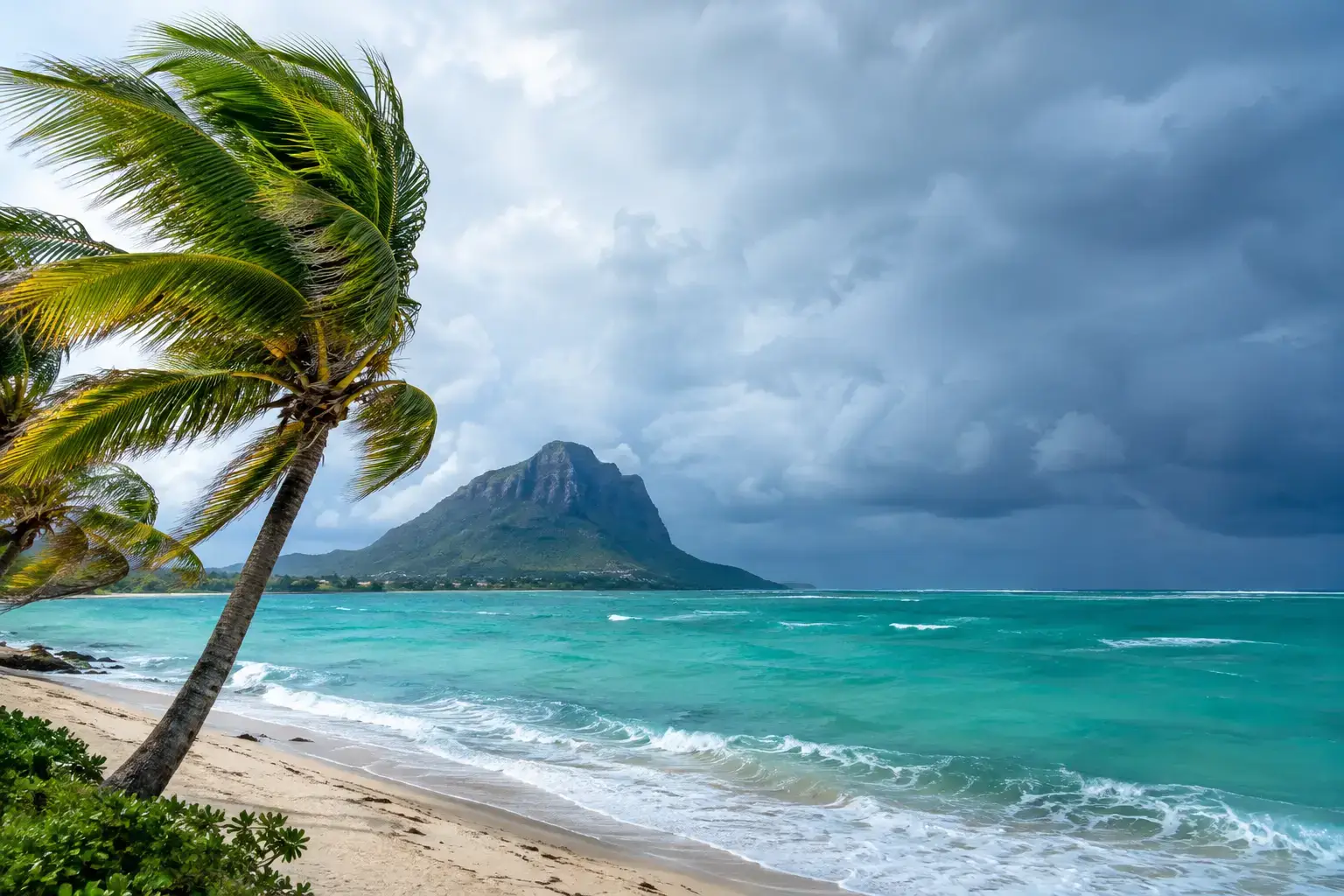
A bright beach morning in Mauritius can change quickly when tropical weather is nearby – which is why knowing when is Mauritius cyclone season matters before you confirm flights, hotels, tours, and airport transfers. The island remains a beautiful vacation destination throughout the year, but travelers visiting during the warmer months should plan with flexibility, reliable local support, and realistic expectations about the weather.
When Is Mauritius Cyclone Season?
Mauritius cyclone season officially runs from November through April. The period with the highest likelihood of tropical cyclones is generally January through March, when the southwest Indian Ocean is at its warmest and most favorable for storm development.
That does not mean Mauritius experiences a cyclone every week, or even every year. Many visitors enjoy sunny, memorable holidays during these months. It does mean that tropical depressions, heavy rain, rough seas, strong wind, and occasional cyclone alerts are more possible than during the island’s cooler, drier season.
A cyclone does not need to make a direct landfall to affect your trip. A system passing well offshore can still bring rain bands, large waves, windy conditions, and temporary closures of beaches, boat excursions, hiking areas, or attractions. The exact impact depends on the storm’s distance, speed, and direction.
What Weather Is Like During Cyclone Season
Cyclone season overlaps with Mauritius’ summer. From November to April, expect warm temperatures, higher humidity, and frequent short tropical showers. Daytime temperatures commonly feel hot, particularly along the coast, while inland areas and the central plateau can be cooler and wetter.
For most of the season, the weather is not constant rain. It can be sunny for much of the day, with a sharp afternoon shower passing through quickly. This is part of the appeal for travelers who want warm sea temperatures, lush landscapes, and a more tropical atmosphere.
The trade-off is that weather-dependent plans require more patience. A catamaran outing, dolphin excursion, or beach day may need to move to another day if sea conditions are not safe. Visibility for scenic viewpoints can also be reduced during heavy cloud or rain. Families and couples who build a little flexibility into their schedule usually find the experience much less stressful.
The Months at a Glance
November and December
November marks the beginning of the warmer, more humid period. Rainfall increases, but there are still many excellent beach days, and the island begins to look especially green. December is popular for holiday travel, so advance planning is sensible even though the weather can be less predictable than in winter.
January to March
January through March is the peak period within the Mauritius cyclone season. These months are typically hot, humid, and wetter, with the greatest chance of a tropical system developing in or moving through the region.
This can still be a rewarding time to visit if you prioritize warm water, relaxed resort time, and a slower itinerary. It may be less ideal if your vacation depends on a fixed daily schedule of boat trips, long hikes, or outdoor photography at specific times. Travelers with young children or limited vacation days may prefer the more settled conditions outside the peak cyclone window.
April
April is a transition month. Summer heat and rainfall can continue, especially early in the month, but conditions often begin to settle as Mauritius moves toward its cooler season. It can be a good choice for travelers who want warmth without traveling during the heart of the peak-risk months.
Should You Avoid Mauritius During Cyclone Season?
Not necessarily. The right travel dates depend on what matters most to you. If you want the most dependable conditions for beach time, road trips, golf, watersports, and full-day excursions, May through October is generally the safer choice. The air is less humid, and cyclones are highly unlikely.
If your travel dates fall between November and April, there is no reason to automatically cancel Mauritius from your plans. Instead, plan well. Choose accommodations that you will enjoy even during a rainy afternoon, avoid packing every day with nonrefundable outdoor activities, and leave room to rearrange excursions around the forecast.
Mauritius is accustomed to tropical weather. During significant weather events, local authorities issue official information and businesses adjust operations according to safety requirements. Hotels, transport providers, and activity operators closely monitor conditions, particularly when warnings are in place. Safety decisions should always take priority over a planned itinerary.
How Cyclone Warnings Can Affect Your Vacation
Mauritius uses a formal cyclone warning system when a tropical cyclone presents a potential threat. Warnings may lead to changes in transportation, business hours, schools, public services, and excursions. Sea-based activities are often among the first to be postponed because rough water can arrive before the closest point of a storm.
If a warning is issued while you are on the island, stay calm and follow advice from your hotel, host, driver, or local coordinator. Do not go to the beach to watch high waves, drive through flooded roads, or assume that a brief break in the rain means conditions are safe. Strong gusts, falling branches, flash flooding, and coastal surf can create hazards even when the storm itself is not directly overhead.
Keep your phone charged, have drinking water and essential medications available, and check official updates rather than relying on social media rumors. If you have a rental car, park it in a secure location away from trees where possible and avoid unnecessary driving during severe conditions.
Smart Planning Tips for a Summer Trip to Mauritius
A well-organized itinerary gives you choices when the forecast changes. Rather than reserving a different outdoor activity every day, alternate bigger excursions with free time at your hotel or nearby attractions. This makes it easier to move a tour without losing the rhythm of your vacation.
Book airport transport in advance, especially for late arrivals or early departures. Stormy weather can make first-day logistics feel more complicated, and knowing that a trusted driver is ready can remove a major source of uncertainty.
Pack for both strong sun and sudden rain. Lightweight clothing, a compact rain jacket, sandals with good grip, insect repellent, sunscreen, and a waterproof pouch for phones and documents are practical additions. A small day bag is useful for changing plans without returning to your hotel.
Travel insurance with weather-related disruption coverage is also worth considering. Read the policy carefully before booking, since coverage can differ for delayed flights, canceled activities, accommodation extensions, and trip interruption. Buying a policy is not a substitute for flexibility, but it can provide useful protection if a major event affects your itinerary.
For excursions, work with local providers who put safety first and communicate clearly. A reputable operator will never pressure guests to go out on the water or continue an activity in unsafe conditions. At Discovering Mauritius, our local planning support can help travelers organize transport and experiences with enough breathing room to adapt when island weather has other ideas.
Best Time to Visit Mauritius for More Reliable Weather
For many leisure travelers, May to October offers the most consistently comfortable conditions. Humidity is lower, rainfall is generally reduced, and the risk of cyclones is minimal. July and August can be breezier, particularly in the south and east, which is welcome for some watersports but can feel cooler for travelers focused on swimming and sunbathing.
September and October are often especially attractive months. The island is warming up, the sea is inviting, and the heaviest summer humidity has not yet arrived. Still, Mauritius has several microclimates. It may be sunny in Flic en Flac while rain falls in the central plateau or near Chamarel, so local advice can make a real difference when choosing the best plan for the day.
The best Mauritius vacation is not always about chasing a perfect forecast. It is about arriving with a plan that works in sunshine, a little flexibility when conditions shift, and the confidence that your island experience is being handled with care.