

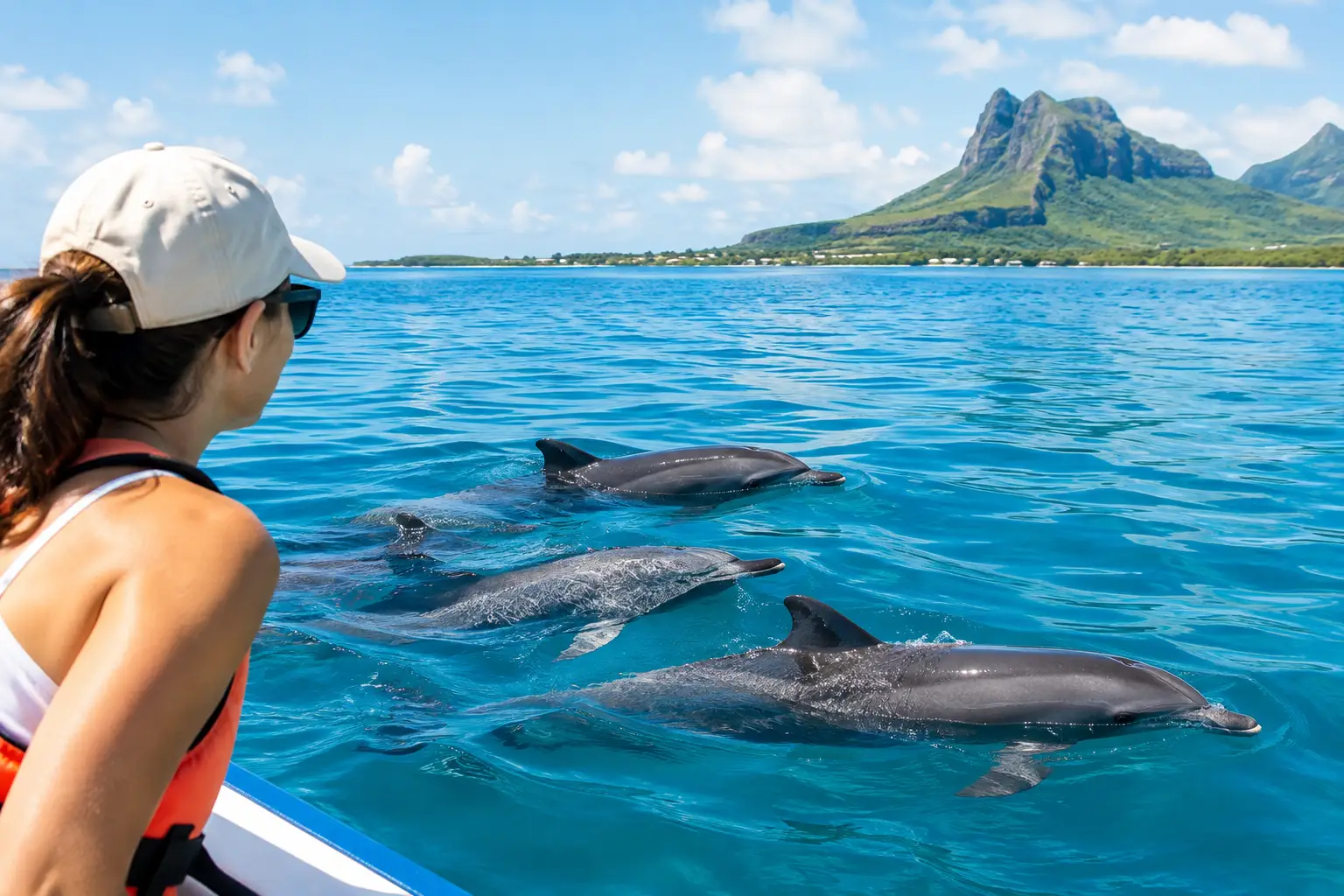
Before most beachgoers have ordered breakfast, boats are already leaving Mauritius’ west coast in the soft light before sunrise. That early start is the defining detail in any Mauritius dolphin tour review: it can feel magical, but it also asks you to trade a relaxed morning for the best chance of seeing wild dolphins in their natural environment.
For couples, families, and first-time visitors, a dolphin excursion can be one of the most memorable mornings of a Mauritius vacation. The coastline around Tamarin Bay and Black River is known for regular dolphin activity, clear water, and dramatic mountain views. Still, this is not an aquarium encounter or a guaranteed swim. The quality of the experience depends on the boat, the crew, sea conditions, your expectations, and the way the operator treats the animals.
What a Mauritius dolphin tour is really like
Most tours begin early because dolphins are commonly seen closer to shore in the morning. Hotel pickup or a pre-arranged meeting point makes a real difference here, particularly when you are staying in Flic en Flac, Le Morne, or another west-coast area and need to arrive while it is still dark.
After boarding, the captain heads toward areas where crews have historically spotted pods. The first part of the trip can be quiet: open water, changing light, and the steady sound of the boat. Then a dorsal fin appears, followed by several more. Dolphins may travel alongside the boat, surface in small groups, or move on quickly. No two outings look the same, which is exactly why the sighting feels special when it happens.
Bottlenose dolphins and spinner dolphins are the species visitors most often hope to see. Spinners are particularly memorable when they leap and rotate above the water, although there is no reason to expect this behavior on every trip. Wildlife does not perform to a schedule.
Some excursions pair dolphin watching with snorkeling, a lagoon stop, or time on a small island. That can add value if you want a fuller half-day experience. On the other hand, travelers focused solely on peaceful dolphin observation may prefer a shorter, direct morning outing rather than several hours on the water.
Mauritius dolphin tour review: the parts that matter most
A good tour is not defined only by whether dolphins appear. Sightings are never fully within a crew’s control. What the operator can control is safety, communication, boat comfort, group size, and respectful behavior around marine life.
The early departure is worth planning around
The start time is often the biggest surprise for visitors. Expect to wake up early, bring a light layer for the breeze, and prepare for a faster ride than a typical sunset cruise. Families with very young children should consider how they handle an early wake-up and choppy conditions before booking.
The reward is that you are out at the best time of day for both the experience and the scenery. The water is often calmer in the morning, the light is beautiful, and the rest of your day remains free for the beach, a spa treatment, or another island activity.
Boat type changes the experience
Speedboats are common because they reach the viewing areas quickly. They are exciting and efficient, but they can feel bumpy when the sea is unsettled. A larger catamaran or more spacious vessel may suit travelers who want a slower, steadier ride, though the exact route and time on the water can differ.
If you are prone to motion sickness, do not leave this decision to chance. Take your usual preventative measures in advance, sit where the ride feels most stable, and choose a boat that fits your comfort level. A spectacular location is much harder to enjoy when you feel unwell.
Swimming is an option, not the purpose
The phrase “swim with dolphins” can create unrealistic expectations. These are wild animals, not dolphins trained to approach swimmers. Sometimes conditions and dolphin behavior may allow guests to enter the water at an appropriate distance. At other times, it is better not to enter at all.
The most responsible crews prioritize the animals’ space. They avoid chasing a pod, cutting across its path, surrounding it with boats, or encouraging guests to touch or pursue dolphins. This approach may feel less dramatic than a high-speed chase, but it creates a calmer and more meaningful wildlife encounter.
Travelers should see swimming as a possible bonus rather than a promise. If the dolphins keep moving or the water is unsafe, a professional captain should explain the decision clearly and offer an enjoyable alternative, such as snorkeling in a suitable lagoon.
Smaller groups usually feel more personal
A crowded boat can make it difficult to see, move safely, or hear the crew’s instructions. It can also make water entry less organized when it is permitted. Smaller groups generally allow for a more relaxed atmosphere and more attentive guidance, especially for nervous swimmers or families.
That said, a private trip is not automatically the right choice for everyone. A shared excursion can be a good fit for independent travelers, couples, and small groups who want a well-organized outing without arranging a boat exclusively. The right choice comes down to privacy, pace, and how much flexibility you want during the morning.
Questions to ask before reserving
Clear details before departure prevent disappointment later. Rather than booking based on photographs alone, ask practical questions about the experience you are actually arranging:
- What time does the boat leave, and is pickup available from your accommodation?
- How long will you be on the water, including any snorkeling or island stop?
- What type of boat is used, and how many guests are typically onboard?
- What safety equipment and guidance are provided for children and less confident swimmers?
- How does the crew approach dolphins, and what happens if swimming conditions are unsuitable?
These questions are not about making the process complicated. They help match the outing to your travel style. A honeymoon couple may want privacy and a quieter pace, while a family may place more value on pickup, shade, safety briefings, and a crew that is patient with children.
When to go and what to bring
Morning is the usual choice for dolphin tours, and the west coast is the natural base for this activity. Weather and sea conditions can change throughout the year, so flexibility is sensible. If your itinerary allows, schedule the excursion early in your stay rather than on your final morning. This leaves room to reschedule if conditions are not suitable.
Bring a towel, reef-safe sunscreen, a hat, drinking water, and a dry bag for your phone or camera. Wear swimwear under comfortable clothing if you may snorkel. Avoid carrying valuables you do not need, and secure sunglasses or anything that could blow overboard during a faster ride.
Photography is welcome, but it should not take over the experience. Watching dolphins surface with your own eyes, even for a few minutes, is often more memorable than trying to capture every moment through a screen.
Is a dolphin tour worth it?
For most visitors, yes – provided they choose it for the right reason. A Mauritius dolphin tour is worth the early alarm if you enjoy being on the ocean, understand that wildlife encounters are unpredictable, and choose an operator that places safety and respect ahead of spectacle.
It may not be the best fit if you dislike boat travel, need a guaranteed activity for young children, or expect close contact with dolphins. In those cases, a glass-bottom boat trip, a relaxed catamaran day, or a land-based west-coast excursion may be a better use of your vacation time.
At Discovering Mauritius, we help guests build days that work as smoothly as they look in the vacation photos, from trusted excursions to transport that gets you there on time. A well-planned dolphin morning should feel simple: arrive prepared, listen to the crew, give the animals space, and let the Indian Ocean do the rest.