

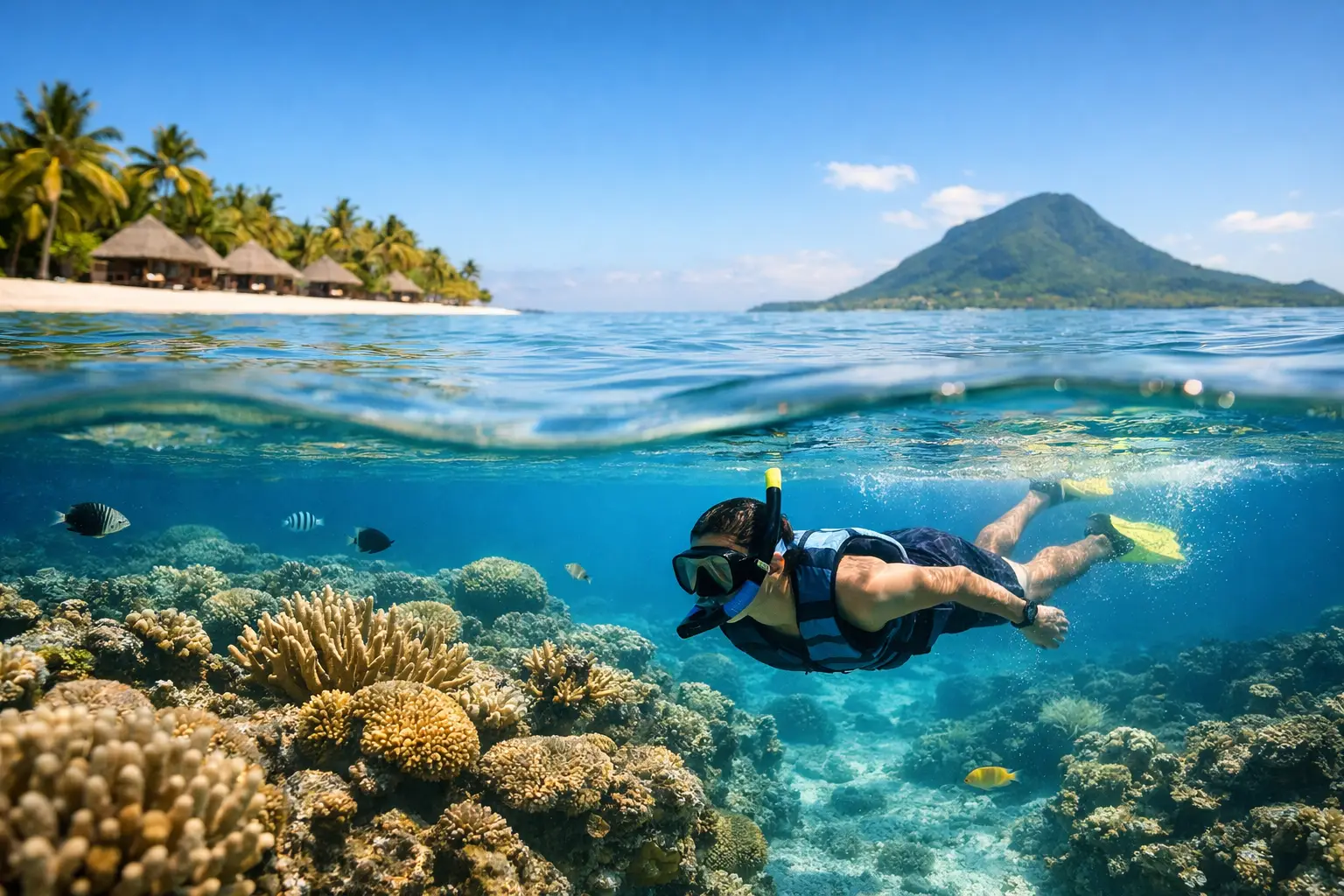
The lagoon can look perfectly still from shore, then reveal a busy world of parrotfish, damselfish, coral heads, and sea grass only a few yards away. This Mauritius snorkeling guide helps you choose the right coast, read the conditions, and plan a reef experience that feels easy from the moment you leave your hotel.
Mauritius is surrounded by a protective coral reef in many areas, creating lagoons that suit first-time snorkelers, families, and confident swimmers alike. Still, not every beach has the same visibility, depth, access, or shelter from the wind. A little local planning makes the difference between a quick swim over sand and a truly memorable morning in the water.
Mauritius snorkeling guide: where to go
The northwest coast is often a strong choice for relaxed lagoon snorkeling. Trou aux Biches is known for calm, clear water and easy entry, making it particularly appealing for couples and families who want to snorkel at their own pace. The reef is not directly at every point along the beach, so it is worth asking locally where conditions and access are best that day.
Mont Choisy also offers a long, welcoming stretch of water, with conditions that can be gentler than more exposed parts of the island. It works well for travelers who prefer a beach day with snorkeling as one part of the plan rather than a dedicated boat outing. Go early, before the breeze builds and the busiest part of the day begins.
On the west coast, Flic En Flac is a convenient base for lagoon time and organized outings. Some areas are better suited to swimming than reef viewing from the shore, but a trusted local excursion can take you to clearer sections and suitable snorkeling spots offshore. This is often the easiest route for visitors who want transport, equipment, and local guidance handled for them.
The southeast offers a different kind of experience. From Trou d’eau Douce, boat trips can reach sheltered lagoons around the east coast islets, where water color alone is worth the journey. These trips are especially popular with small groups and couples combining snorkeling with a full day on the water. Conditions can be more weather-dependent on this side of Mauritius, so flexibility matters.
Blue Bay, in the southeast, is widely valued for its marine park setting and coral formations. It can be an excellent choice for snorkelers who want more to observe beneath the surface, but it deserves respectful behavior and careful supervision for less confident swimmers. Avoid standing on coral, even in shallow areas, and follow the guidance provided on site.
Choose the conditions, not just the beach
Mauritius is a year-round destination, but snorkeling quality changes with wind, rain, tides, and the coast you choose. Clear skies do not automatically mean clear water. Strong winds can stir up sand and create chop, while heavy rain may reduce visibility near shore.
For the calmest experience, morning is usually the smart choice. The sea is often flatter, visibility can be better, and you have more time to adjust if the conditions are not right. Afternoon snorkeling can still be enjoyable, particularly in protected lagoons, but it is best approached with realistic expectations.
The island’s warmer months, generally from November through April, bring very pleasant water temperatures but can also bring humidity, showers, and occasional cyclonic weather. From May through October, the air is often drier, though trade winds can affect exposed east and south coasts. There is no single best month for every traveler. Your preferred area, swimming confidence, and willingness to take a boat trip all shape the right choice.
A trusted local operator will assess the day’s weather and sea state rather than sending guests out simply because an activity was scheduled. If visibility is poor or the water is unsettled, changing the location or timing is a sensible decision, not a disappointment.
What to bring for a comfortable reef day
A well-planned snorkeling session needs very little, but the right basics improve comfort. Use a mask that seals properly around your face, and test it before heading into deeper water. A leaking mask is frustrating for adults and can quickly put children off the experience.
Fins help you move with less effort, especially if there is a light current, but they are not essential for every shallow lagoon. If you are new to snorkeling, a flotation vest or buoyancy aid can provide reassurance without taking away the fun. It is far better to feel supported and relaxed than to push beyond your ability.
Choose a rash guard or light long-sleeve swim top for sun protection. Mauritius sunlight is strong on the water, and shoulders and backs can burn surprisingly fast. Apply reef-conscious sunscreen before you set out, then give it time to absorb. Bring drinking water, a towel, and dry storage for your phone and valuables if you are traveling by boat.
If you wear glasses, consider a prescription mask or contact lenses only if you are comfortable swimming in them. Do not compromise your vision just to avoid planning ahead. Seeing the reef clearly is part of what makes the experience special.
Snorkel safely and leave the reef healthy
The most rewarding snorkeling is calm, unhurried, and respectful. Enter slowly, keep enough distance from the reef, and float rather than stand whenever coral is nearby. Coral may look like rock, but it is a living ecosystem that can be damaged by a single careless step.
Keep your hands to yourself underwater. Fish, turtles, and other marine life should never be chased, touched, fed, or cornered for a photo. A patient snorkeler usually sees more anyway. Pause, float quietly, and let the reef return to its normal rhythm around you.
Pay attention to boat lanes, currents, and changing depth. Stay with your group, use a surface marker if one is provided, and do not swim beyond the lagoon or reef pass without experienced guidance. Even strong swimmers can be caught out by currents where water moves through an opening in the reef.
Families should keep children within close reach, even in seemingly shallow water. A child who is comfortable in a pool may need time to adapt to waves, a mask, fins, and the sensation of seeing fish below. Start near the shore, keep the first session short, and let confidence grow naturally.
When an organized snorkeling trip is worth it
Shore snorkeling is wonderfully simple when your hotel is close to a protected lagoon and you are comfortable managing your own equipment. An organized trip becomes especially valuable when you want to reach offshore reefs, visit a marine park, travel with children, or avoid the uncertainty of arranging transport and conditions on your own.
The right outing should include clear safety guidance, suitable equipment, enough time in the water, and a crew that knows when to adjust the plan. Ask whether the trip suits beginners, how deep the snorkeling area is, and whether flotation aids are available. These details matter more than a rushed itinerary with too many stops.
Discovering Mauritius can help coordinate trusted snorkeling experiences alongside private transport, car rental, and the other details that make a holiday feel effortless. It is a practical way to keep a beach day flexible while still benefiting from local knowledge.
Make room for the unexpected
Some days bring excellent visibility and schools of colorful fish close to shore. On others, the sea asks for a slower plan: a sheltered beach, a later departure, or a different activity until conditions improve. Build that flexibility into your Mauritius vacation, and the day you finally slip into calm, clear water will feel exactly as it should – easy, safe, and unforgettable.