

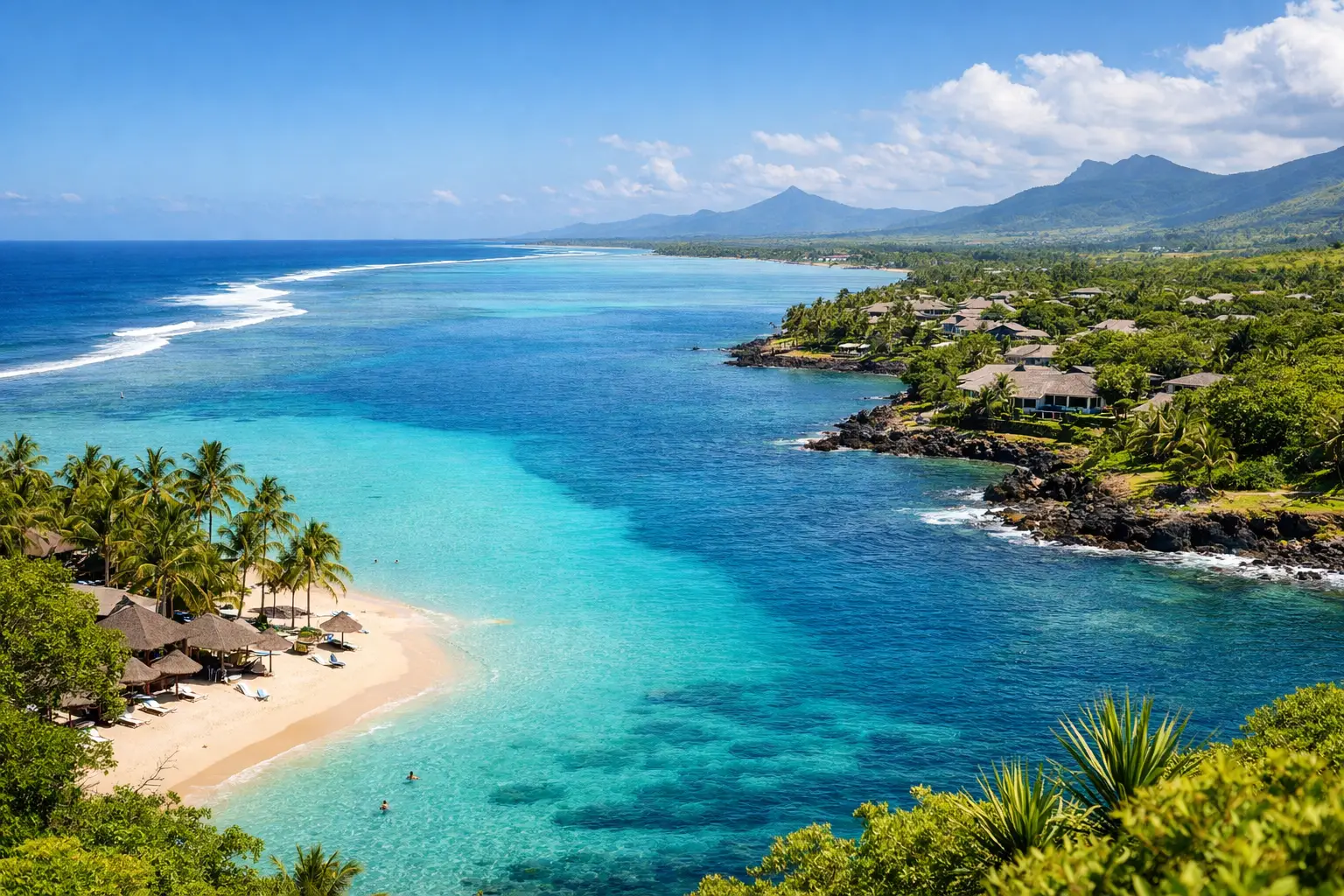
A sunrise swim in Belle Mare, sunset cocktails in Flic En Flac, a family day near Grand Baie, or a quiet escape beneath Le Morne mountain: deciding which coast to stay in Mauritius shapes the rhythm of your entire vacation. This is a compact island, but each shoreline has a distinct personality, weather pattern, and level of activity. The best choice is not simply the beach that looks best in a photo. It is the coast that fits how you want your days to feel.
Mauritius can be driven across in a few hours, yet staying close to the experiences you value means less time in the car and more time enjoying paradise on earth. Whether you are planning a romantic break, a family holiday, or a relaxed trip with friends, here is how to choose your ideal base.
Which coast to stay in Mauritius for your travel style
The north and west are generally the easiest choices for travelers who want plenty of dining, excursions, and flexibility. The east suits guests looking for wide beaches, a more peaceful setting, and beautiful morning light. The south and southwest appeal to those who want dramatic scenery, nature, and a quieter side of the island.
There is no wrong answer, but there are meaningful trade-offs. A secluded resort area may offer calm and privacy but fewer restaurants within a short drive. A livelier town can make evenings effortless, though it may not deliver the remote, barefoot feeling some travelers imagine. Your preferred pace matters more than following a one-size-fits-all recommendation.
North Mauritius: lively, convenient, and full of choice
The north coast is a strong match for travelers who like having options close by. Grand Baie, Mont Choisy, and Trou-aux-Biches are among the most convenient areas for restaurants, shopping, water activities, and evening entertainment. It is an especially practical base for independent travelers, couples who enjoy going out, and families who want easy access to everyday essentials.
Grand Baie is the liveliest choice. You can spend the day cruising, snorkeling, or visiting nearby beaches, then head out for dinner without committing to a long drive. It feels energetic and social, particularly during peak travel periods. If you prefer a calmer stay without moving far from the north’s conveniences, Mont Choisy and Trou-aux-Biches offer a more relaxed beach atmosphere.
The north also works well for boat excursions toward the northern islands. It is less suitable if your dream is a remote coastal escape surrounded by untouched scenery. Travelers seeking that sense of space may prefer the east or southwest.
Choose the north if you want
Choose the north if you value variety, easy evenings, and quick access to activities. It is a reliable all-rounder for first-time visitors who want their Mauritius vacation to feel simple and well connected.
West Mauritius: sunsets, calm water, and easygoing days
For many visitors, the west coast delivers the classic Mauritius balance: beautiful beaches, a relaxed holiday mood, and a convenient location for exploring. Flic En Flac is a popular base because it combines a long public beach, nearby restaurants, and access to excursions across the west and central parts of the island.
The west is known for its warm, golden sunsets. Its lagoon is often calm, making the area appealing for swimming, boat trips, and families traveling with children. You are also well positioned for experiences around Chamarel, Black River, and the island’s western nature areas. A dolphin cruise or a day exploring waterfalls and viewpoints can fit comfortably into your itinerary from here.
Flic En Flac has a livelier local feel than the east, although it is generally less concentrated than Grand Baie. It offers a practical middle ground for couples, groups, and families who do not want to be isolated but still want a relaxed beach base.
The trade-off is that some west-coast beaches can feel busier, especially on weekends and public holidays. If quiet beach time is your main priority, choose accommodation slightly away from the busiest central stretches or consider the south.
East Mauritius: peaceful beaches and a resort escape
The east coast is where many travelers find the postcard version of Mauritius: long stretches of pale sand, turquoise lagoons, and an unhurried atmosphere. Belle Mare and Trou d’Eau Douce are ideal for honeymooners, beach-focused couples, and anyone who wants to wake up near an expansive coastline rather than a busy town.
Belle Mare is particularly known for its broad beach and tranquil resort setting. It is a wonderful choice if your plan is to slow down, enjoy spa time, swim, and give yourself permission to do very little. Mornings can be spectacular here, with soft light over the lagoon and fewer crowds than on the more active north and west coasts.
Trou d’Eau Douce is a smart choice for travelers planning to visit Ile aux Cerfs. Staying nearby makes an early boat departure much easier and leaves more of the day for enjoying the island’s beaches and water activities.
The east is often breezier than the west, particularly during the Mauritian winter months from around May through October. For some visitors, that breeze is welcome in warm weather. For others, especially those who want consistently calm swimming conditions, the west may be the safer fit. Dining and nightlife options can also be more limited outside major resorts, so private transport or a rental car adds freedom.
South and southwest Mauritius: scenery, privacy, and adventure
The south is the choice for travelers who want Mauritius at its most natural and dramatic. This part of the island feels less built up, with rugged coastal views, sugarcane fields, forested landscapes, and striking mountain backdrops. Le Morne, Bel Ombre, St Felix, and the surrounding southwest are particularly attractive for couples, nature lovers, and repeat visitors who want a different side of the destination.
Le Morne is unforgettable for its mountain setting, turquoise water, and wide-open beach scenery. It is also a leading area for kitesurfing when conditions are right. Even if you are not a watersports enthusiast, the landscape alone makes it a special place to stay. Expect a more resort-centered experience, with fewer spontaneous restaurant choices than in Grand Baie or Flic En Flac.
Bel Ombre and St Felix suit travelers looking for privacy and a slower pace. They are well placed for discovering Chamarel, the south coast, and scenic countryside. This is the coast to choose when your ideal afternoon involves a quiet beach, a long lunch, and no pressure to be anywhere else.
The south can be windier and the sea can be rougher in certain areas, so it is not always the first choice for families whose priority is protected lagoon swimming every day. However, for scenery, space, and a more exclusive atmosphere, it is hard to beat.
Consider the season before choosing your coast
Mauritius is enjoyable year-round, but the island’s microclimates matter. The warmer, more humid period generally runs from November to April, while May to October is drier and cooler. During the cooler months, the west and north are often favored by beach lovers because they are more sheltered from southeast trade winds.
The east and south can feel breezier during this period, which is ideal for kitesurfers and travelers who appreciate cooler air but less ideal for those picturing glass-calm water every day. In the warmer months, every coast can be appealing, though summer showers are more common and weather is never guaranteed.
Do not choose solely by a seasonal rule, though. A beachfront resort on the east may still be perfect in July if you want quiet, luxury, and long walks, while the west may be better in January if you want a central base for sightseeing. The right decision comes from matching the conditions to your personal vacation style.
Plan transport around your chosen base
Your coast determines how easily you can reach the experiences on your wish list. The island is manageable by car, but distances feel longer after a flight or a full day in the sun. Pre-arranged airport transfers remove the stress of arrival, while a rental car or private driver gives you more freedom once you are settled.
For example, a north or west base makes many restaurants and activities easy to reach, while a stay in Belle Mare or Le Morne rewards travelers who are happy to build their days around their hotel, beach, and a few carefully planned excursions. Discovering Mauritius can help coordinate trusted transport, activities, and a tailored route so your location works with your plans rather than limiting them.
The best answer is the coast that feels like your vacation
Stay in the north for energy and convenience, the west for sunsets and a flexible holiday base, the east for peaceful beaches, and the south for wild beauty and space. If you are splitting a longer trip, combining two coasts can be even better: begin with sightseeing and activity in the north or west, then finish with quiet beach time in the east or south.
Choose the place that gives you more of the moments you came for, whether that is a lively dinner by the marina, a sunrise over an empty lagoon, or a sunset beneath Le Morne. With the right base and a few arrangements made before arrival, Mauritius feels wonderfully easy to enjoy.
[…] northwest coast is often a strong choice for relaxed lagoon snorkeling. Trou aux Biches is known for calm, clear […]
[…] On the east coast, the experience is different. You may not watch the sun sink straight into the ocean, but a late-afternoon cruise near Belle Mare or Trou d’Eau Douce can still be beautiful, particularly for travelers drawn to calm lagoons and the changing light over the water. The best choice is always the one that fits the season, weather, and location of your hotel. […]